
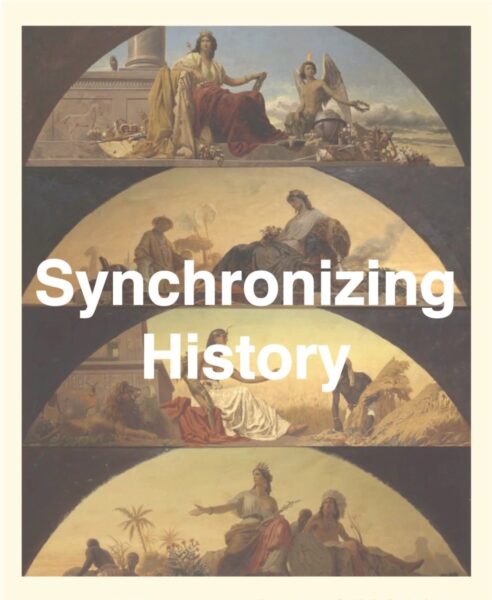
SYNCHRONIZING HISTORY
The Times of Global Modernity (c. 1450-1850): Methods and Case Studies on Interactions, Ideas, and Imaginaries
UNIVERSITÀ DEGLI STUDI DI MILANO
ACCADEMIA AMBROSIANA
9-11 September 2026
“Synchronizing History”, with its interdisciplinary and international historiographical approach, is now in its third edition. The meetings in Palermo (2024) and Rio de Janeiro (2025) enabled the participating scholarly community to examine and reflect on the circulation of ideas between Europe and the Americas as a multidirectional exchange, albeit under profoundly unequal conditions across societies on both continents. Despite unfolding against a backdrop of invasion, cultural destruction, violence, the slave trade and slavery, and colonial extractivism, these dynamics nevertheless generated encounters and interactions that transformed both individuals and collective actors across these connected worlds.
The key challenge – one that remains urgent – is to deepen the study of these exchanges in the early modern and modern periods from a genuinely intercultural, global perspective. For this reason, the third meeting of our project broadens its scope to encompass Early Globalization more fully, including its revolutionary and imperial reconfigurations. It adopts a periodization that extends from the late Middle Ages to the transition to the contemporary era. By welcoming scholars working on world interactions across these centuries, the Milan conference will build on the outcomes of the first two meetings and expand the network of researchers pursuing historical inquiry through both entangled and comparative approaches, and across micro- and macro-level contexts.
Maria Matilde Benzoni – Blythe Alice Raviola
PROGRAMME
Wednesday, 9th September 2026
University of Milan Via Festa del Perdono, 7
10.00 – Welcome and Opening Session
Aula 113 – Room 113, Via Festa del Perdono, 7
Welcome addresses
Andrea Gamberini
Direttore del Dipartimento di Studi Storici – Federico Chabod
Marco Castellari
Direttore del Dipartimento di Lingue, Letterature, Culture e Mediazioni
Introduction
Blythe Alice Raviola
Dipartimento di Studi Storici – Federico Chabod
Maria Matilde Benzoni
Dipartimento di Lingue, Letterature, Culture e Mediazioni
10.45 – Keynote Speaker – Edoardo Tortarolo (Università del Piemonte Orientale – CISH)
11.45 – Session: Geographies, Cartographies, and Geopolitics
Aula 113 – Room 113, Via Festa del Perdono, 7
Chair: Michela Catto (Università di Torino)
Alessandro Ricci (Università di Bergamo), Early Modern Globalization in Maps: Global Lines and Synchornized Geography
Louise Bénat-Tachot (Sorbonne Université, Paris), Pour une Histoire Synchronique de la Mappemonde au XVIe Siècle: Enjeux, Défis et Apories
Damiano Canella (Università di Bergamo), Jerusalem in the Global Modern Age: From Geographical Pivot to Geopolitical Periphery
Adam Włodarski (University of Warsaw), Global Imagination and Imperial Argumentation in the Polish- Lithuanian Commonwealth, 1609–1618
13.30 LIGHT LUNCH
15.00 – Session: Temporalities and Periodizations
Aula 113 – Room 113, Via Festa del Perdono, 7
Chair: Blythe Alice Raviola (Università degli Studi di Milano)
Lorenzo Comensoli Antonini (Scuola Normale Superiore, Pisa), Towards a Periodisation of Modernity from the Sixteenth-Century Religious Crisis
Luis Alfredo De la Peña Jiménez (European University Institute – University of the Basque Country), Synchronicity and Revolution. The Chronology of the Independence Wars of Greece and Colombia
Ana Laura Camargo (Sâo Paulo State University), Dwelling on the Aporias of the Conceptualization of Time and Their Implications for the Temporality of the Historical Discipline
Gabriele Gulletta (Università degli Studi di Milano), From History to Metahistory: Eighteenth- and Nineteenth-Century History as the Ground for a Synchronization of Practices in the Postmodern Reconceptualization of Western Historical Writing
RUNNING IN PARALLEL
15.00 – Panel: Synchronizing the Atlantic: Knowledge, Alterity and Imperial Order in the Age of Revolutions (ca. 1760 – 1805)
Aula 309 – Room 309, Via Festa del Perdono, 7
Chair: Maria Matilde Benzoni (Università degli Studi di Milano)
Simona Crosta (Università degli Studi di Milano – École Normale Supérieure, Paris), Nervous Diseases, Lifestyles and Revolutions: Circulations and Interactions of Medical Discourse in the Atlantic World (ca. 1770-1805)
Francesco Dendena (Università degli Studi di Milano), Reflecting on Defeat, Imagining a Patriotic Empire
Amanda Maffei (Università degli Studi di Milano), Visualizing Saint-Domingue: Cartography and Imperial Intelligibility in the Age of Revolutions (ca. 1763-1805)
Murillo Dias Winter (Federal University of Fronteira Sul – UFFS), Synchronizing Insurgency: Connected Revolts, Political Temporalities, and State Formation in Brazil, 1817–1850
Thursday, 10th September 2026
University of Milan, Via Santa Sofia 9
9.45 – Session: Asia in European Sources, Historiography, and Thought
Aula Polivalente – Multipurpose Room, via Santa Sofia 9
Chair: Paola Cavaliere (Università degli Studi di Milano)
Clotilde Jacquelard (Sorbonne Université, Paris), La Misión Japonesa de Tenshō (1582-1590) Según el Historiógrafo Oficial de la Monarquía Católica Antonio de Herrera y Tordesillas
Ángel García Rubio (Universidad de Málaga), Toward a Connected History of the Global Production and Circulation of Knowledge. Southeast Asia and the Iberian Empires through Gabriel de San Antonio’s Breve y verdadera relación (1604)
Ruiji Zhang (Stanford University), The Challenge of Chinese Antiquity: Francesco Bianchini’s Conception of Universal History at the End of the Seventeenth Century
Francesco Campennì (Università della Calabria), A Particular Form of Convergence between Philosophy and Philology: Interest in the Ancient Peoples from the East to “Other Worlds” in Eighteenth-Century Neapolitan Thought
RUNNING IN PARALLEL
9.45 – Session: Sources and Methods for Tracing Interethnic Relations in New Spain and the Viceroyalty of Peru
Aula Immersiva – Immersive Room, Via Santa Sofia 9
Chair: Louise Bénat-Tachot (Sorbonne Université, Paris)
Mónica Elivier Sánchez González (University of Guanajuato campus Leon) – Miguel Ángel Segundo Guzmán (University of Guananjuato campus Guanajuato), La Relación de Michoacán: Distinctions to Historicize Violence, Turning points
Daniele Colonnetti (Scuola Superiore Meridionale di Napoli) – René Ramos-Rocha (Université de Toulouse), Silenced Traces. Indigenous Agencies in the Novohispanic Wars Against the Chichimecas Barbarians (Michoacán and Jalisco, 1530 – 1556)
Sandra Elena Guevara Flores (Autonomous University of Barcelona), Medical Linguistics: Relaciones Geográficas and Contact Pathocenosis in New Spain (1521-1580)
Lorena Tord Velasco (Universitat Pompeu Fabra, Barcelona), Beyond the Map: Reconstructing the Urban Barrios of Inca Cusco through Notarial Evidence (16th–19th Centuries)
COFFEE BREAK
11.45 – Session: Transfers, Adaptations, and Appropriations
Aula Polivalente – Multipurpose Room, Via Santa Sofia, 9
Chair: Luigi Alonzi (Università di Palermo)
Emanuele Giusti (Università di Firenze), Synchronizing Histories, Producing Difference: Persian Historiography in Early Modern Europe
Benjamin Leathley (Università di Bologna – Universitat Pompeu Fabra, Barcelona), Classifying the Gentiles: The Role of José de Acosta for Gerardus Vossius’s Seventeenth-Century Ontology of Paganism
Noelia Muñoz Esteban (Universidad de León), From Reality to Stereotype: The Visual Construction of the “Galley Turk” in Early Modern Europe
Denis Smetanin (Università di Torino), Synchronizing Carbon: Useful Coal, Foreign Models, and Imperial Futures in the Northern Black Sea Region of the Russian Empire, 1825–1850
RUNNING IN PARALLEL
11.45 – Panel: Composing and Discomposing Social Order in the Peruvian Viceroyalty: Narratives and Agencies in New Historiographical Perspectives (1538-1638)
Aula Immersiva – Immersive Room, Via Santa Sofia, 9
Chair: Clotilde Jacquelard (Sorbonne Université, Paris)
Manfredi Merluzzi, Marco Verra (Università Roma Tre), Narratives from the Borders of the Empire: Cities, Networks and Chronicles in Gonzalo Pizarro Rebellion (1544-1548)
Diana Barreto Avila (Colegio San Luis Potosi, Mexico – Università Roma Tre), From “Encomenderas” to Mendicants: Narratives in the Founding of Women’s Monasteries in Lima, 1554–1584
Simona D’Angeli (Università Roma Tre), Negotiating Freedom: Power Dynamics and Personal Bonds Between Black Slaves and the Clergy in 17th Century Lima
13.30 LIGHT LUNCH
14.45 – Session: Missionary Practices, Representations, and Legacies
Aula Polivalente – Multipurpose Room, Via Santa Sofia 9
Chair: María Inés Mudrovcic (IPEHCS-CONICET–Universidad Nacional del Comahue, Argentina)
Ferran Vilalta (Universitat Pompeu Fabra, Barcelona), Imagining Conversion: Giovanni Battista Lucarelli’s Viaggio dell’Indie (c. 1590) and his Franciscan Project for China
Alessandro Tripepi (Università degli Studi di Milano), Paper Lives: The Biographical Genre and the Global Construction of Anti-Jesuit Identity (1649–1691)
Corinna Gramatke (Universität Augsburg), Unexpected Innovations. “El Paraguay Cultivado” an unpublished Late-Eighteenth-Century Manuscript by José Sánchez Labrador, S.J.
Roland Ndille (University of Buea-Cameroon), Two Out of the Gospel Ship: Missionaries who didn’t see us as Heathens.
RUNNING IN PARALLEL
14.45 – Session: Arts and Techniques in Transit and Translation
Aula Immersiva – Immersive Room, Via Santa Sofia 9
Chair: Lisa Regazzoni (Bielefeld University, Germany)
Andre Mesquita (State University of Rio de Janeiro), Andrea Mantegna’s Descent into Limbo and the Circulation of an Italian Invenzione
Ana De Dios Castón (Universitat Jaume I, Castellón de la Plana), ‘De la China del Japón’: Japanese ceramics within Valencian region
Ruggero Pace Gravina (Università degli Studi di Milano), Keeping the Clocks Running: Maintenance, Craft and Technology in the Early Modern Iberian World
Beatrice Ragazzini (Università di Bologna), Measuring Time in Architectural History: The Periodisation of English Medieval Architecture and the Circulation of Ideas across European Communities of Experts
Maria Saveria Ruga (Accademia di Belle Arti di Catanzaro), Academy, Copy, Exhibition: Migrating Models of Italian Art between Naples, Rome and Imperial Brazil (1843-c. 1850)
16.30 – Session: Trajectories of Catholic Devotion
Aula Polivalente – Multipurpose Room, Via Santa Sofia 9
Chair: Manfredi Merluzzi (Università Roma Tre)
Tamara Quírico (State University of Rio de Janeiro), Visual Depictions of the Archangel Michael: Iconographic and Devotional Models Between Europe and America
Ana Sánchez Casado (Universidad Autónoma de Madrid), A Global Devotion: The Immaculate Conception and the Circulation of Religious. Practices across the Spanish Monarchy
Irene Sobrino Tejo (Universidad de Valladolid), From Europe to America: the Visual Concretion of the Relation between the Immaculate Conception and the Eucharist
Monica Zavala Cabello (Universidad Autónoma Metropolitana – Unidad Azcapotzalco), From Page to Wall: Transatlantic Circulation and the Visual Translation of Teresa of Ávila’s Legacy in Colonial Mexico City
RUNNING IN PARALLEL
16.30 – Session: Imaginaries and Textualities on the Move
Aula Immersiva – Immersive Room, Via Santa Sofia, 9
Chair: Francesco Campennì (Università della Calabria)
Keren E. Federico (Università della Calabria), The World Inherited by Columbus: Classical, Medieval, and Humanistic Sources of the Western Route
María Agostina Saracino (Universidad Nacional de San Martín), The Young Lope de Vega and the Dramatization of the Conquest of the ‘Other’ between Providentialism and Strategies of Self-Promotion
Nathaniel Sola Rubio (Universitat Jaume I, Castellón de la Plana), The “Indigenous Female Collaborator”: Imaginaries of Power in Malinche and Pocahontas (16th-19th Centuries)
Florencia Ferrante (Università di Genova), Margins, Clusters and Crossings: Religious Translation Threads in 19th Century Latin America
Friday, 11th September 2026
Biblioteca Ambrosiana Piazza Pio XI, 2
Welcome addresses – don Alberto Rocca
10.15 – Lectio Magistralis . Peter Burke (Cambridge University), Chronological Encounters between Europe and China (17th-18th Centuries)
11.30 – Plenary Session: Synchronizing History Network
Chair: Davide Cadeddu (Università degli Studi di Milano)
Luigi Alonzi (Università degli Studi di Palermo), De-Synchronizing ‘Africa’
María Inés Mudrovcic (IPEHCS-CONICET–Universidad Nacional del Comahue, Argentina), When Synchronization Becomes a Tribunal: Ontological Friction and the Politics of Time
Shahzad Bashir (Aga Khan University, London), The Politics of Time in South Asia Since the Nineteenth Century
Lisa Regazzoni (Bielefeld University, Germany), Materializing Time in Space: Indigenous Peoples, French Peasants, Celtic Remnants, and the Unresolved Paradox of the Non-Synchronous World
Helge Jordheim (University of Oslo), Synchronizing History One Spike at the Time: The Making of Geochronology
Ethan Kleinberg (Wesleyan University), The Synchronizing History Network: a Programmatic Introduction
15.00 – Visit to the Ambrosiana Library
SCIENTIFIC DIRECTORS
Maria Matilde Benzoni – Blythe Alice Raviola
Università degli Studi di Milano
SCIENTIFIC COMMITTEE
Luigi Alonzi, Università di Palermo
Antonio Álvarez Ossorio, Universidad Autónoma de Madrid
Evelyne Azevedo, State University of Rio de Janeiro
Maria Matilde Benzoni, Università degli Studi di Milano
Peter Burke, Emmanuel College, Cambridge
Giulia Calvi, European University Institute
Giorgio Caravale, Università degli Studi Roma Tre
Michela Catto, Università di Torino
Valentina Favarò, Università di Palermo
Maria Luz González Mézquita, National University of Mar del Plata
Morihisa Ishiguro, University of Kanazawa
Hephzibah Israel, University of Edinburgh
Helge Jordheim, University of Oslo
Ethan Kleinberg, Wesleyan University
Stefano Levati, Università degli Studi di Milano
Alexandra Lianeri, University of Thessaloniki
Marina Massimi, Universidade de São Paulo
Manfredi Merluzzi, Università degli Studi Roma Tre
Franco Motta, Università di Torino
Maria Lúcia Pallares Burke, Centre of Latin American Studies, Cambridge
Sabina Pavone, Università di Napoli L’Orientale
Blythe Alice Raviola, Università degli Studi di Milano
Gaetano Sabatini, Istituto Storico Italiano per l’Età Moderna e Contemporanea, Roma
ORGANIZING COMMITTEE
Luigi Alonzi, Università di Palermo
Maria Matilde Benzoni, Università degli Studi di Milano
Michela Catto, Università di Torino
Manfredi Merluzzi, Università di Roma Tre
Blythe Alice Raviola, Università degli Studi di Milano
ORGANIZING SECRETARY
Enrico Beviglia Canè, Università degli Studi di Milano
Michele Brusadelli, Università degli Studi di Milano
Daniele Colonnetti, Scuola Superiore Meridionale, Napoli
Amanda Maffei, Università degli Studi di Milano
Gianluca Magro, Università degli Studi di Milano